GA4 · MX PowerPlay
MX PowerPlay Shopify Tracking: GA4 and GTM
Shopify GA4 and GTM tracking with purchase value, checkout funnel events, remarketing audiences and Facebook event tracking.
Purchase value and checkout funnel tracking configured
USA
MX PowerPlay
eCommerce
Shopify
GA4 + GTM + Facebook Tracking
Outcome
Purchase value and checkout funnel tracking configured
Deliverables
- Shopify data layer events to GA4 via GTM
- Purchase events with revenue values
- Purchase and checkout funnel reports in GA4
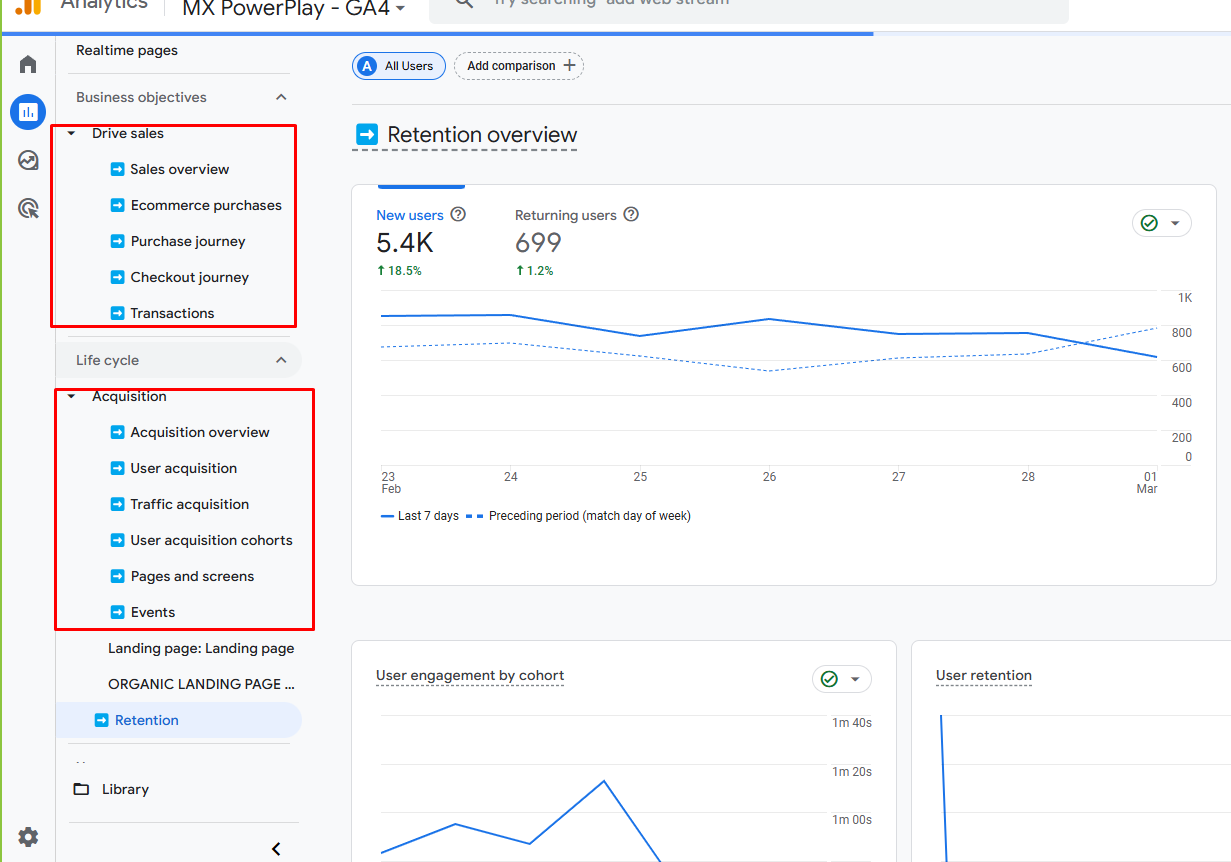
- Adjusted GA4 navigation for sales, acquisition and checkout reporting
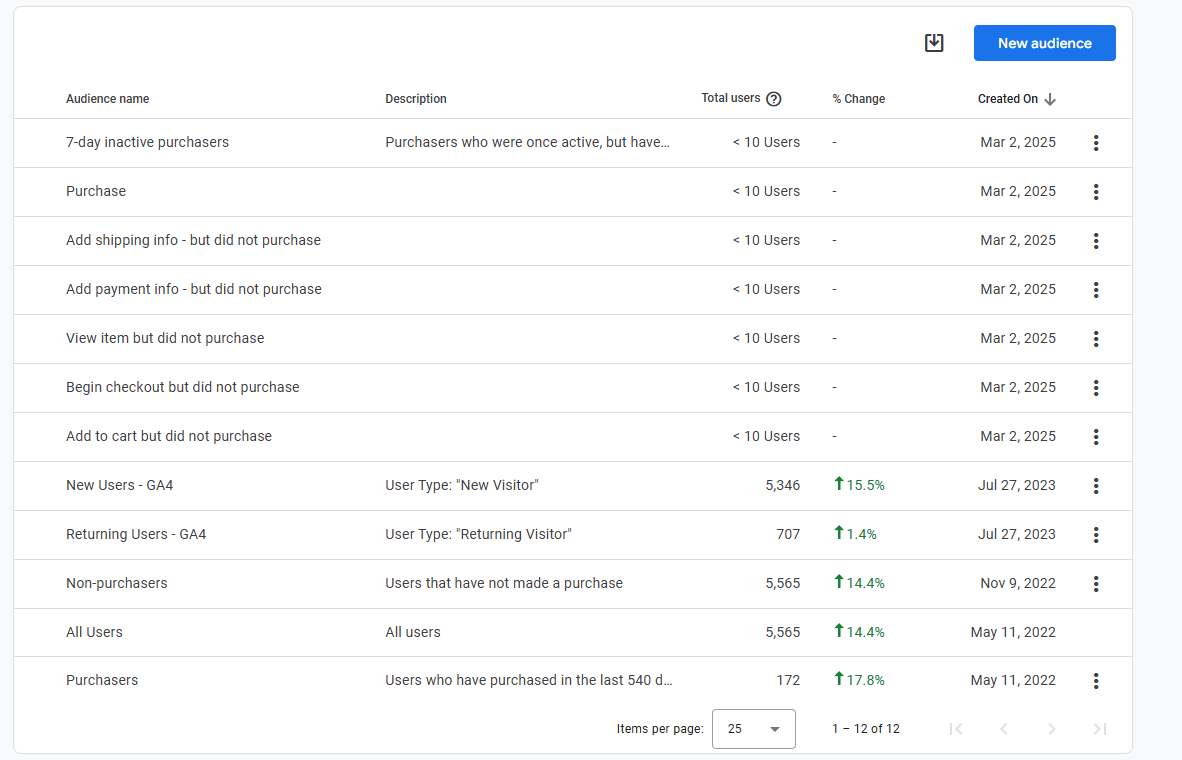
- Remarketing audiences for eCommerce campaign segmentation
What Tracking Problem Did MX PowerPlay Have?
MX PowerPlay needed Shopify eCommerce tracking that connected the store data layer to GA4, Google Tag Manager, Facebook tracking and an alternate analytics platform for revenue and funnel analysis.
What Tracking Setup Was Implemented?
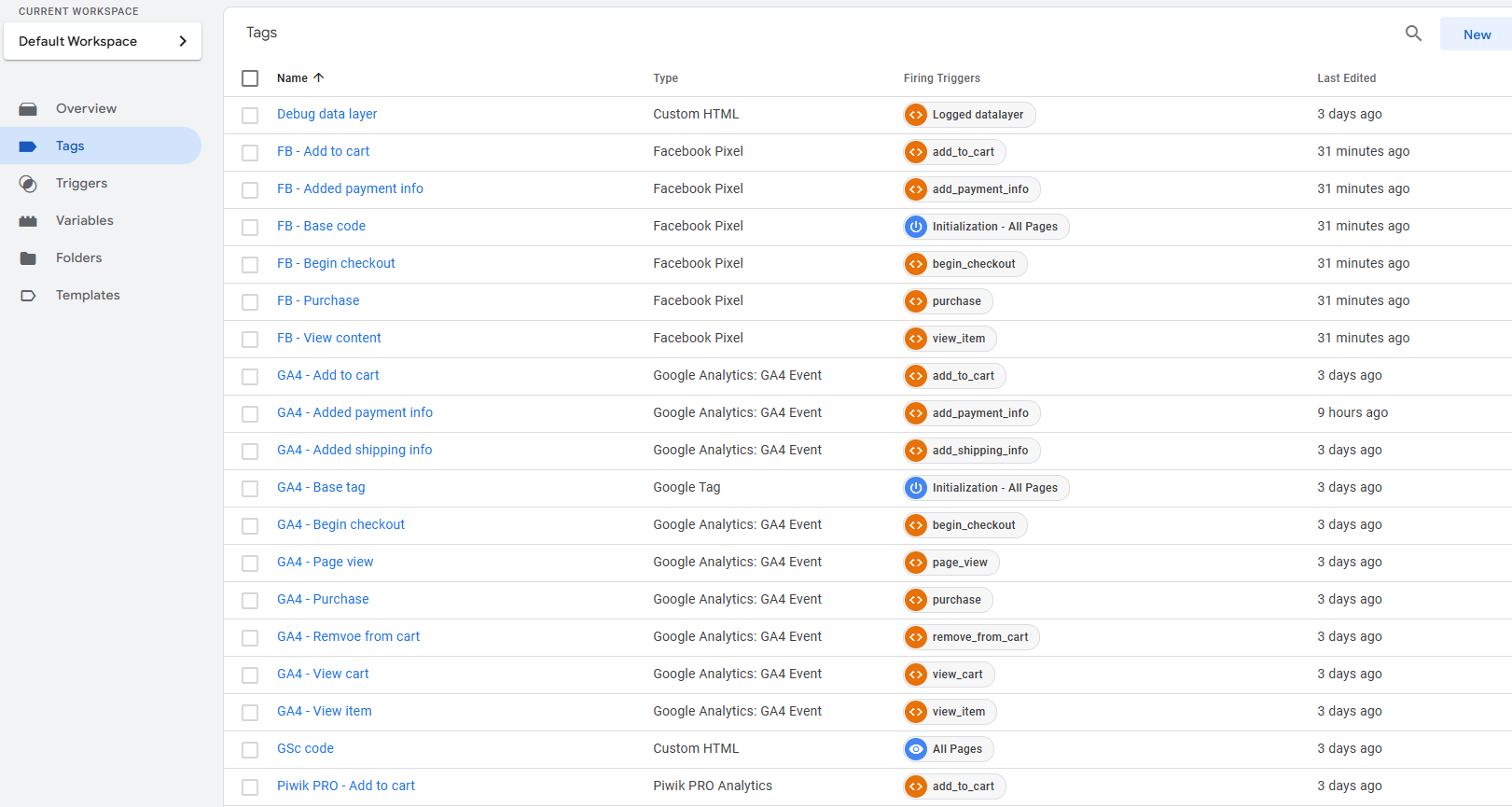
The setup connected Shopify data layer events to GA4 through Google Tag Manager with separate tags and triggers for product, cart, checkout and purchase actions.
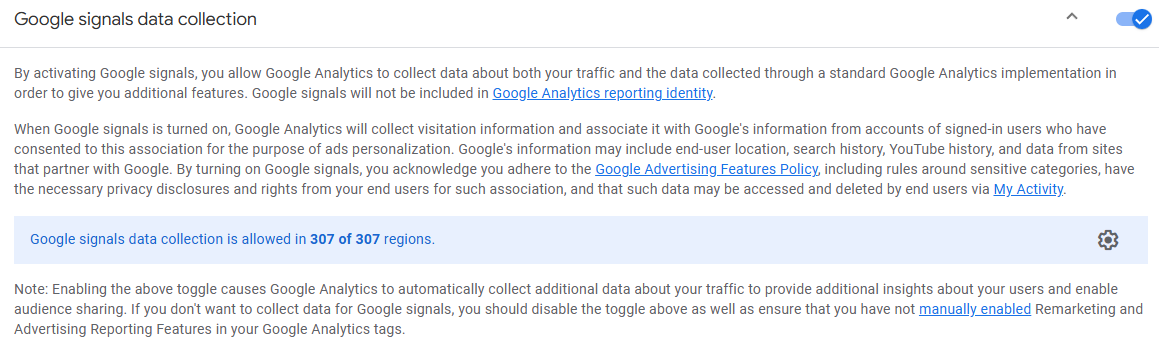
The implementation also configured user-provided data collection, Google Signals, remarketing audiences, dashboard navigation updates and Piwik PRO eCommerce reporting for a second analytics view.
How Was the Shopify Data Layer Used?
The Shopify data layer supplied product, cart, checkout and order attributes to GTM, giving GA4 and Facebook tags the same event source.
- Product attributes: item name, item category and item group values for product-level reporting.
- Cart attributes: cart additions, cart removals and cart view actions.
- Checkout attributes: begin checkout, shipping information and payment information steps.
- Order attributes: purchase event, transaction value and order-level revenue data.
Which GA4 eCommerce Events Were Configured?
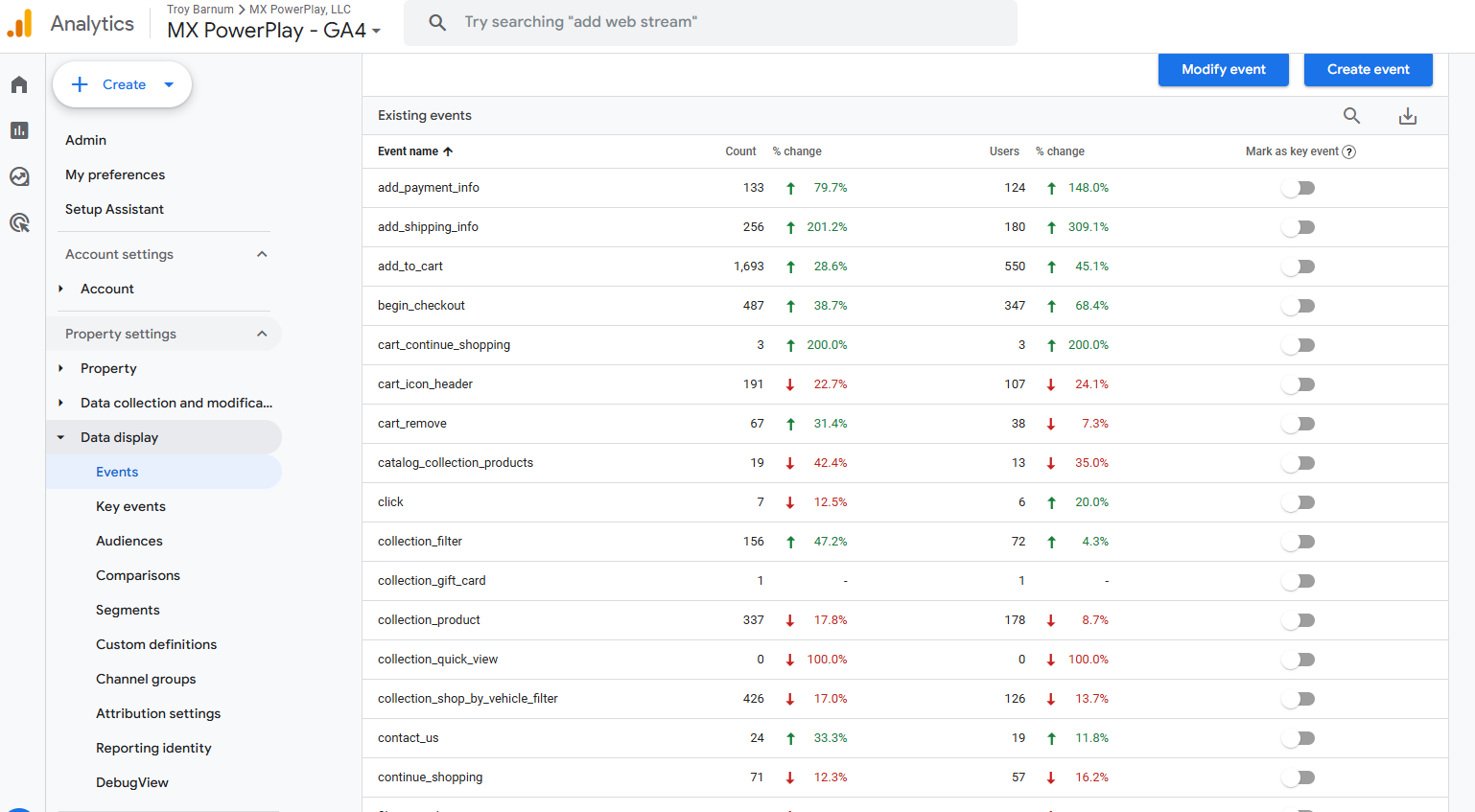
GA4 eCommerce tracking measured the customer journey from product interaction to confirmed purchase with revenue values attached to completed orders.
- view_item: product detail view measurement.
- add_to_cart: cart addition event from the Shopify data layer.
- begin_checkout: checkout start event.
- add_shipping_info: shipping step event.
- add_payment_info: payment step event.
- purchase: completed order event with purchase value.
- remove_from_cart and view_cart: cart behavior measurement.
How Were Funnel Reports Configured?
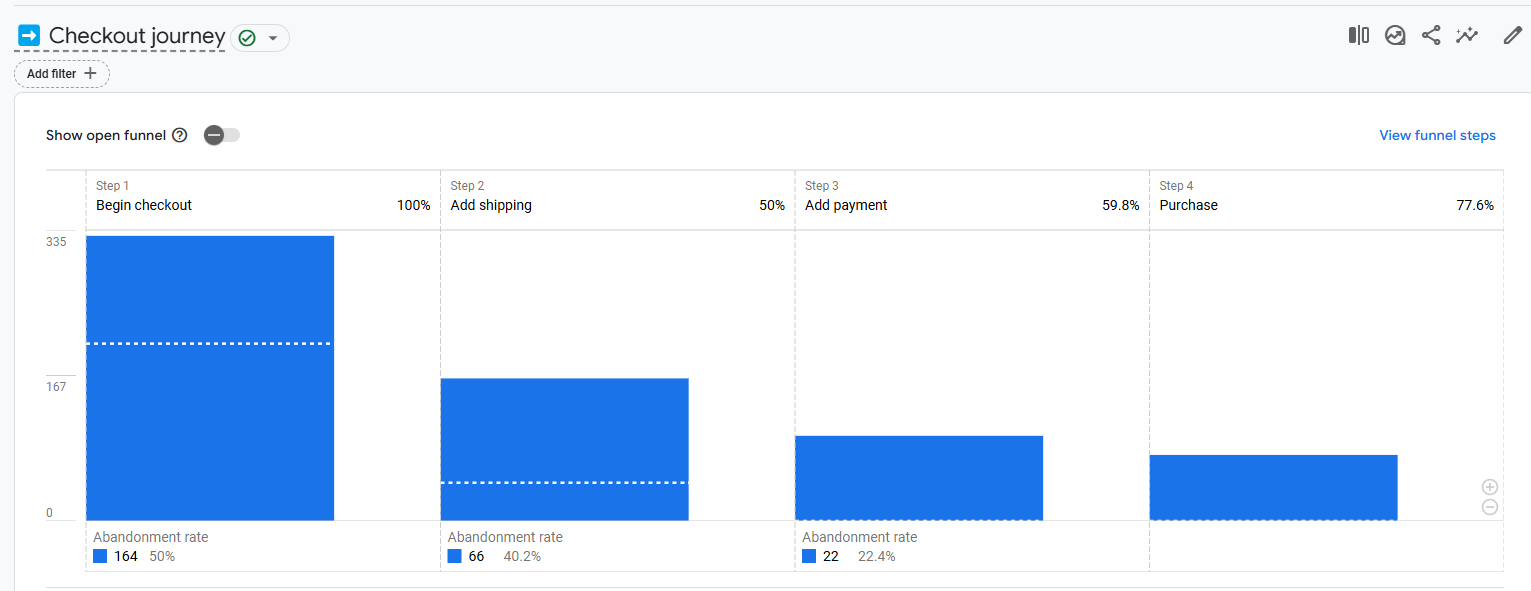
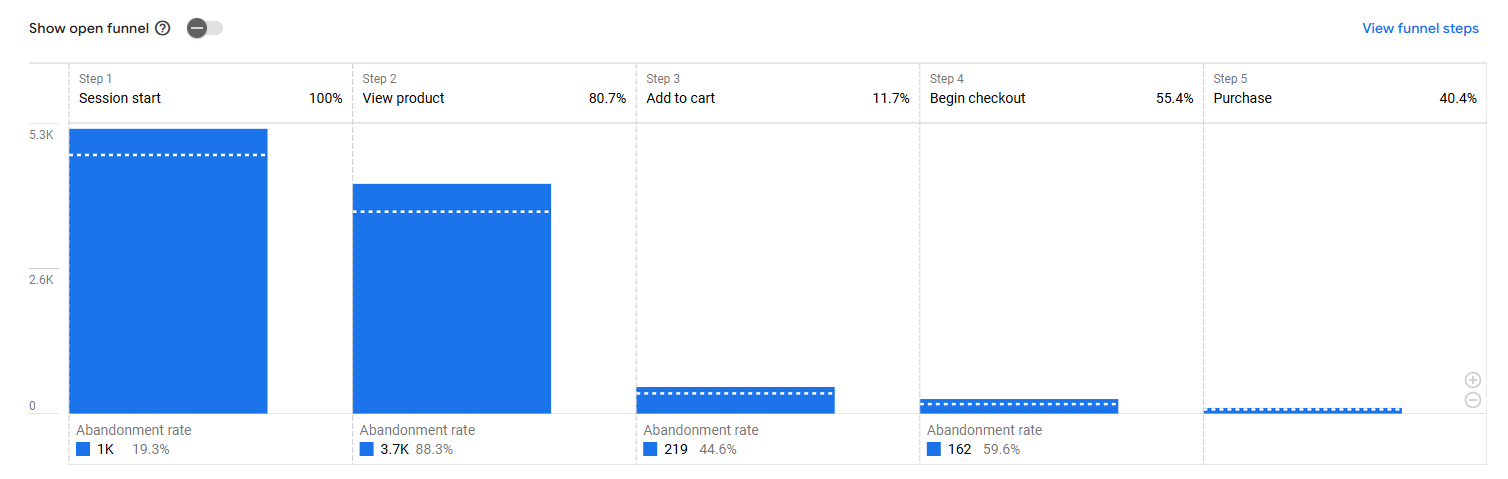
GA4 funnel reporting covered the purchase path and checkout path, showing drop-off between product views, cart additions, checkout steps and purchases.
- Purchase funnel: session start, product view, add to cart, begin checkout and purchase.
- Checkout funnel: begin checkout, shipping step, payment step and purchase.
- Dashboard UX: GA4 navigation adjusted for easier access to sales, acquisition and event reports.
How Was the GA4 Dashboard Adjusted?
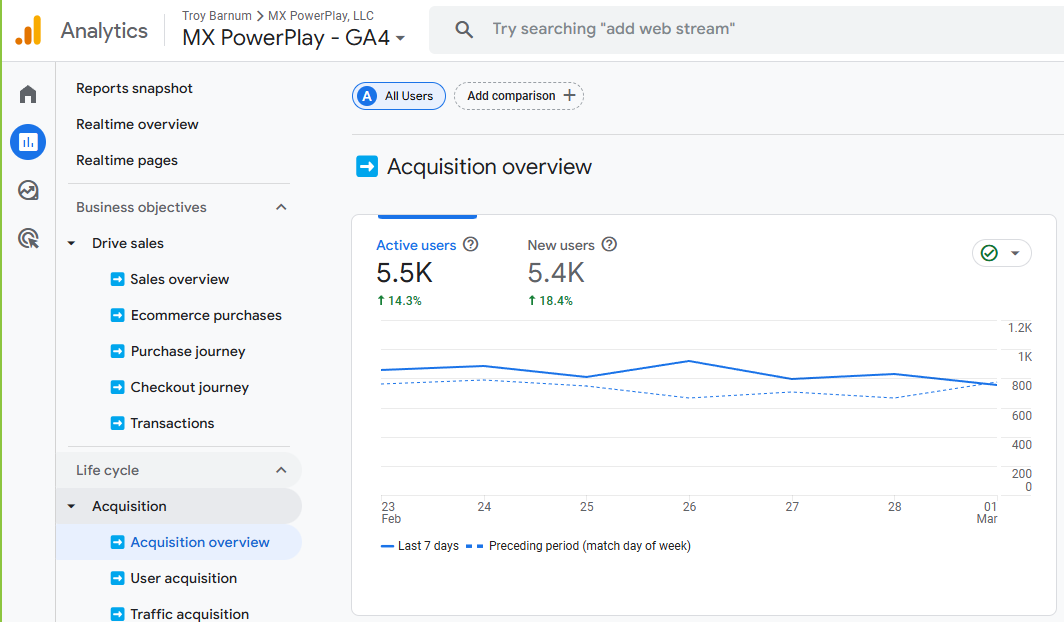
The GA4 interface was organized around eCommerce tasks, giving the client faster access to sales, acquisition, events, purchase journey and checkout journey reports.
- Drive sales reports grouped sales overview, eCommerce purchases, purchase journey, checkout journey and transactions.
- Acquisition reports grouped traffic acquisition, user acquisition, landing pages and event reports.
- Event reports kept product and checkout events available for implementation review.
Which Remarketing and Advertising Signals Were Added?
Remarketing configuration included GA4 audiences, Google Signals data collection and Facebook tracking for product views, payment-step activity and purchase confirmation.
- GA4 audiences for purchasers, non-purchasers, returning users and checkout-stage behavior.
- Google Signals for demographics and advertising audience eligibility.
- Facebook ViewContent tracking for product detail activity.
- Facebook AddPaymentInfo tracking for payment-step activity.
- Facebook Purchase tracking for completed order confirmation.
How Was Piwik PRO Used Alongside GA4?
Piwik PRO was configured as an alternate analytics view for eCommerce channel reporting, order activity, revenue analysis and abandoned cart monitoring.
- Channel reporting grouped campaign, direct, search, website and social sessions.
- ECommerce reporting showed orders, order rate, products and abandoned cart activity.
- The alternate analytics view gave the client a second reporting source outside GA4.
How Was Tracking Validation Completed?
Tracking validation confirmed that GA4 collected user activity, purchase value was recorded, funnel reports populated and Facebook purchase tracking matched a confirmed order.
- GA4 user tracking confirmed active data collection after GTM deployment.
- Purchase tracking confirmed order value collection after checkout completion.
- Facebook purchase tracking was checked against a confirmed purchase event.
- GA4 report timing was documented because standard reports process new data over a period of up to 72 hours.
What Did the Tracking Implementation Deliver?
The implementation delivered Shopify purchase value tracking, checkout funnel visibility, GTM event deployment, GA4 remarketing audiences, Facebook event tracking and Piwik PRO eCommerce reporting.
- Connected Shopify data layer events to GA4 through Google Tag Manager.
- Configured purchase events with revenue values.
- Built purchase and checkout funnel reports in GA4.
- Adjusted GA4 navigation for sales, acquisition and checkout reporting.
- Created remarketing audiences for eCommerce campaign segmentation.
- Added Facebook ViewContent, AddPaymentInfo and Purchase events.
- Configured Piwik PRO as an alternate eCommerce analytics view.